

Did you know that students who actively recall information, rather than passively rereading it, can improve their test scores by as much as a letter grade? [Source needed] This startling fact underscores a fundamental truth: effective studying isn’t just about putting in the hours; it’s about how you spend those hours. In 2026, with an ever-increasing volume of information at our fingertips, mastering efficient study techniques is more crucial than ever for academic success and lifelong learning. Forget the all-night cram sessions and the endless highlighting of textbooks. This guide dives deep into scientifically proven strategies that will transform your approach to learning, helping you absorb, retain, and recall information with unprecedented ease.
Who This Article Is For
This comprehensive guide is designed for anyone looking to elevate their learning capabilities. Are you a high school student grappling with complex subjects? A university student aiming for top marks? Perhaps you’re a professional pursuing continuing education or learning a new skill for career advancement. Maybe you’re simply someone who enjoys expanding their knowledge base and wants to do so more efficiently. If you’ve ever felt frustrated by your study habits, struggled to retain what you’ve learned, or wished there was a “better way” to prepare for exams, then this article is your roadmap. We’ll equip you with practical, evidence-based techniques that are adaptable to virtually any learning scenario.
Who This Article Is NOT For
While we aim for broad applicability, this article might not be the primary resource for individuals who:
- Are seeking quick-fix “hacks” that bypass the learning process. True mastery requires effort and understanding, not shortcuts.
Are looking for specific subject-matter tutoring. Our focus is on the process* of learning, not the content itself.
- Believe passive consumption of information (like simply watching videos or rereading notes repeatedly) is the most effective strategy. While these can be supplementary, they are not the core of deep learning.
- Are already employing most of the advanced, science-backed techniques discussed here with consistent success.
The Science of Learning: Understanding How Your Brain Works
Before we dive into specific methods, it’s vital to grasp a few core principles of how our brains learn. Our minds are not passive recipients of information; they are active constructors of knowledge. Learning involves creating and strengthening neural pathways. The more you engage with material in meaningful ways, the stronger these connections become, leading to better retention and recall.
Two key concepts dominate the science of learning: desirable difficulty and retrieval practice. Desirable difficulty suggests that learning is most effective when it’s challenging but not overwhelming. Pushing your brain to work harder to recall information, rather than passively reviewing it, leads to more robust and lasting learning. Retrieval practice, often called the “testing effect,” is the act of actively recalling information from memory. This is far more potent than simply rereading notes or textbooks. Each time you successfully retrieve a piece of information, you strengthen that memory trace.
Another critical element is spaced repetition. Our brains tend to forget information over time. Spaced repetition involves reviewing material at increasing intervals – shortly after learning it, then a day later, then a few days later, and so on. This combats the natural forgetting curve [Source needed] and embeds information into long-term memory. Finally, interleaving – mixing different subjects or topics during a study session – can also enhance learning by forcing your brain to differentiate between concepts and apply the correct strategies.
Science-Backed Study Methods That Deliver Results
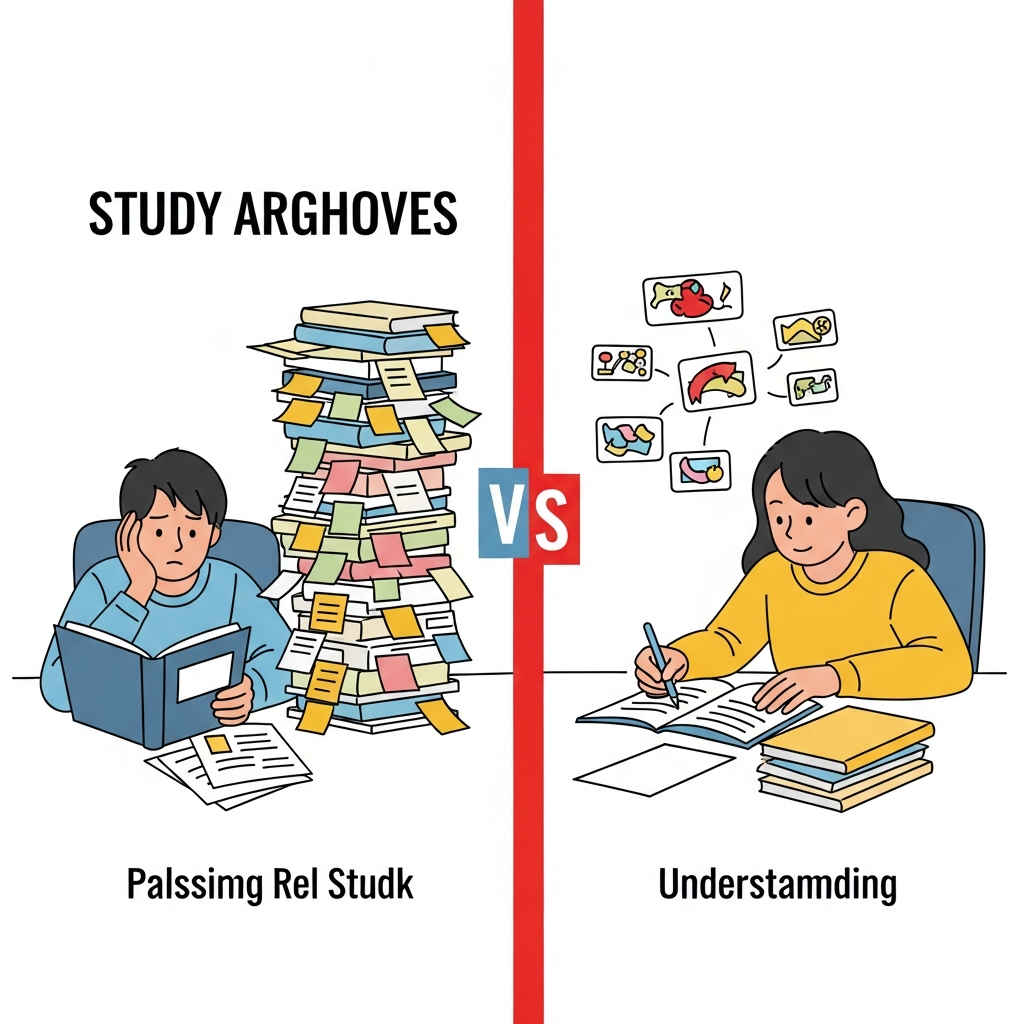
Now, let’s translate these scientific principles into actionable study techniques. These are not merely suggestions; they are methods validated by extensive cognitive psychology research.
1. Active Recall (The Power of Retrieval Practice)
How to study effectively using active recall? This is perhaps the single most impactful technique you can adopt. Instead of rereading your notes or textbook chapters, actively quiz yourself. Close your book and try to explain a concept aloud. Write down everything you remember about a topic without looking at your materials. Use flashcards, but instead of just looking at the back, try to answer the question before flipping it over.
Why it works: Active recall forces your brain to retrieve information, strengthening the neural pathways associated with that knowledge. It also highlights what you don’t know, allowing you to focus your study efforts more effectively. This process is akin to a mental workout, building stronger memory muscles. It’s like trying to find a specific tool in a cluttered toolbox; the effort of searching makes you much more likely to remember where it is next time.
Practical application:
- After reading a section, put the book down and summarize the key points in your own words.
- Create flashcards with questions on one side and answers on the other. Test yourself rigorously.
- Use practice questions from your textbook or online resources.
- Teach the material to someone else (or even an imaginary audience). Explaining forces you to organize and articulate your understanding.
2. Spaced Repetition (Battling the Forgetting Curve)
How to study effectively using spaced repetition? Don’t cram! Distribute your learning over time. Review material at increasing intervals. For instance, review new material shortly after learning it, then again the next day, then three days later, then a week later, and so forth.
Why it works: Our brains naturally forget information. Spaced repetition strategically revisits information just as you’re about to forget it, reinforcing the memory trace and pushing it into long-term storage. This is far more efficient than massed practice (cramming), where information is learned quickly but forgotten just as rapidly. Think of it like watering a plant: a little water frequently is much better than a deluge once in a blue moon.
Practical application:
- Use flashcard apps like Anki or Quizlet, which have built-in spaced repetition algorithms.
- Schedule regular review sessions for previously learned material.
- Integrate review of older topics into your study plan for newer ones.
3. Elaboration (Connecting New Information to What You Already Know)
How to study effectively using elaboration? Connect new concepts to your existing knowledge base. Ask yourself “why” and “how” questions. Explain the material in your own words, drawing parallels to things you already understand. The more connections you build, the more pathways you create for retrieval.
Why it works: Elaboration transforms passive learning into an active process of meaning-making. When you link new information to existing memories, you create a richer, more interconnected mental network. This makes the information more meaningful and easier to recall. It’s like adding new threads to an already intricate tapestry; the new threads are held firmly by the existing structure.
Practical application:
- Ask yourself: “How does this relate to what I already know?”
- Try to explain a concept using analogies or metaphors.
- Discuss the material with peers, debating different interpretations.
- Generate your own examples to illustrate abstract concepts.
4. Interleaving (Mixing Up Your Subjects)
How to study effectively using interleaving? Instead of studying one subject for an extended period (blocked practice), mix different subjects or topics within a single study session. For example, if you’re studying math, alternate between different types of problems (e.g., algebra, geometry, calculus) rather than doing only algebra problems for an hour.
Why it works: Interleaving forces your brain to constantly switch gears and identify the correct strategy or concept for each problem. While it might feel less productive in the short term compared to blocked practice, it leads to more durable learning and better problem-solving skills. It trains your brain to discriminate between different concepts and apply the right knowledge at the right time. Imagine a musician practicing scales and then immediately jumping into a complex piece; this constant switching builds adaptability.
Practical application:
- Dedicate study blocks where you cycle through several subjects or topics.
- When practicing problems, mix different types rather than doing them in batches.
- If preparing for multiple exams, alternate study sessions for each subject.
5. Dual Coding (Using Words and Visuals)
How to study effectively using dual coding? Combine verbal information with visual elements. Draw diagrams, create mind maps, sketch concepts, or visualize processes in your mind. Pair text with relevant images, charts, or graphs.
Why it works: Our brains process visual and verbal information through different channels. By engaging both channels, you create stronger, more distinct memory traces. Visuals can help organize complex information and make abstract concepts more concrete, while words provide precise detail. This dual approach offers multiple retrieval cues. It’s like having two different keys to unlock the same door; if one doesn’t work, the other might.
Practical application:
- Create your own diagrams, flowcharts, or concept maps.
- Look for relevant images, infographics, or videos that illustrate the material.
- Visualize processes or historical events as if you were watching a movie.
- Use color-coding in your notes to highlight different themes or ideas.
6. Concrete Examples (Making Abstract Ideas Tangible)
How to study effectively using concrete examples? Abstract concepts can be difficult to grasp. Ground them by finding or creating specific, real-world examples. If you’re learning about a psychological theory, find a news story or personal experience that illustrates it.
Why it works: Concrete examples make abstract ideas more relatable and memorable. They provide tangible anchors for complex information, making it easier to understand and recall. When you can link a principle to a specific instance, your brain has a clearer picture to latch onto. It’s the difference between describing the concept of gravity and pointing to an apple falling from a tree.
Practical application:
- When encountering a new concept, actively search for real-world examples.
- If no examples are readily available, try to invent your own.
- Use case studies or historical events to illustrate principles.
Structuring Your Study Sessions for Maximum Impact
Effective studying isn’t just about what techniques you use, but also how you structure your time.
The Pomodoro Technique
This popular time management method involves breaking down work into intervals, traditionally 25 minutes in length, separated by short breaks. After four “Pomodoros,” you take a longer break.
Why it works: The Pomodoro Technique combats mental fatigue and distraction. The short bursts of focused work create a sense of urgency, while the regular breaks allow your brain to rest and consolidate information. It makes daunting tasks feel more manageable. It’s like running short sprints instead of a grueling marathon, allowing for recovery and sustained effort.
Practical application:
- Set a timer for 25 minutes of focused study.
- During this time, eliminate all distractions (phone off, notifications silenced).
- Take a 5-minute break to stretch, get water, or simply relax.
- After four cycles, take a longer break (15-30 minutes).
Planning and Prioritization
Effective study requires a plan. Before you even begin, identify your learning goals for the session and prioritize tasks based on importance and urgency.
Why it works: A clear plan reduces procrastination and ensures you’re focusing on the most critical material. Prioritization helps you allocate your limited time and energy where it will have the greatest impact. It prevents you from getting bogged down in less important details. Having a roadmap prevents you from wandering aimlessly.
Practical application:
- Create a weekly study schedule.
- Before each study session, list the specific topics or tasks you aim to complete.
- Rank your tasks by priority (e.g., difficult concepts, upcoming deadlines).
- Break down large tasks into smaller, more manageable steps.
Creating the Right Study Environment
Minimize distractions and create a space conducive to focus. This might mean a quiet library, a dedicated desk at home, or even a specific coffee shop.
Why it works: Your environment significantly impacts your ability to concentrate. A cluttered or noisy space can lead to fragmented attention and reduced cognitive performance. A consistent, distraction-free environment helps signal to your brain that it’s time to focus. It’s like preparing a stage before a performance; the right setting enhances the act.
Practical application:
- Choose a location with minimal noise and visual clutter.
- Inform family or roommates about your study times to minimize interruptions.
- Keep your study materials organized and easily accessible.
- Turn off or silence your phone and close unnecessary browser tabs.
Mistakes to Avoid When Studying
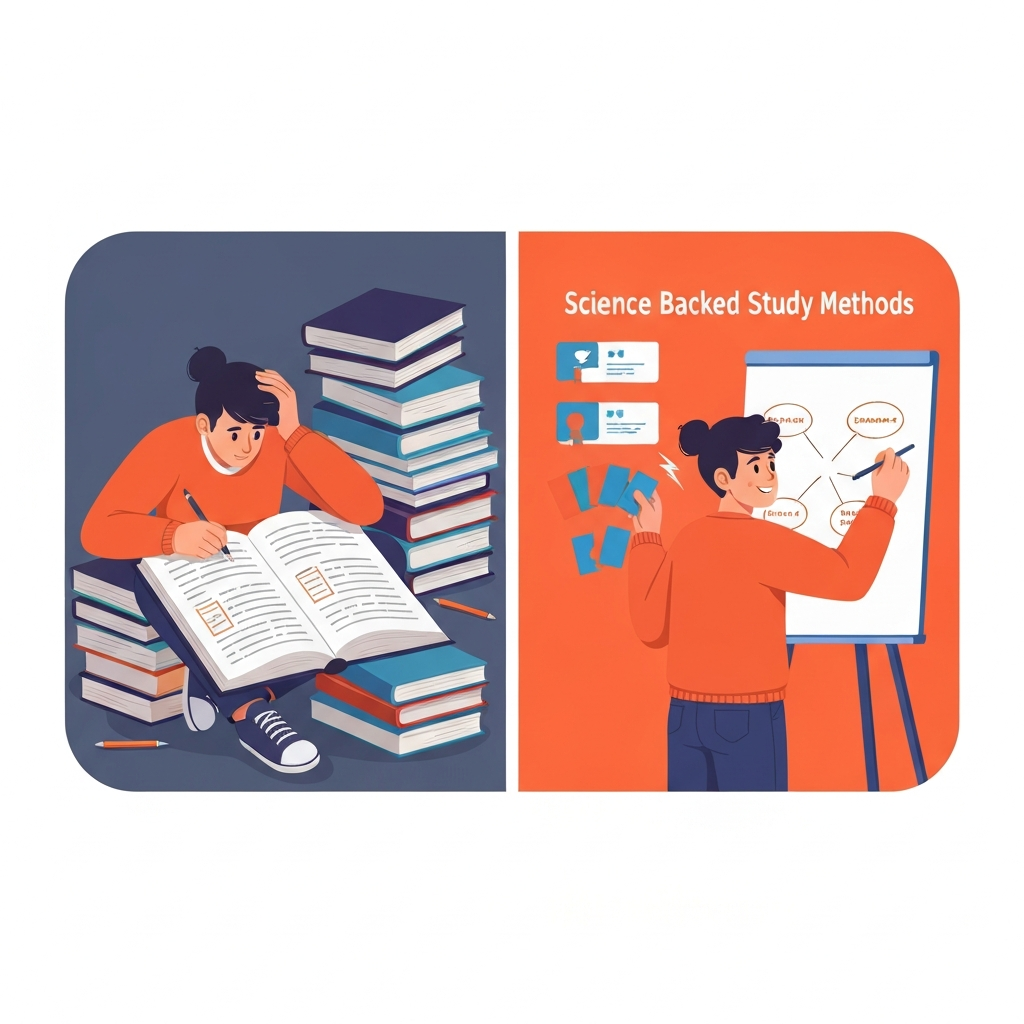
Even with the best intentions, common pitfalls can derail your efforts. Being aware of these can help you steer clear of them.
1. Passive Rereading
Mistake: Spending hours rereading notes or textbooks without actively engaging with the material.
Why it’s a mistake: This creates an illusion of knowing. You become familiar with the text, but you’re not truly testing your recall or understanding. It’s a low-effort activity that yields poor long-term retention.
Solution: Replace rereading with active recall and elaboration techniques.
2. Cramming (Massed Practice)
Mistake: Trying to learn a large amount of information in one long, continuous session, usually right before an exam.
Why it’s a mistake: While you might retain some information for the immediate test, it’s quickly forgotten. It doesn’t build robust, long-term understanding. Your brain becomes overloaded and less efficient.
Solution: Employ spaced repetition and consistent, shorter study sessions over time.
3. Lack of Planning
Mistake: Diving into studying without a clear goal, strategy, or schedule.
Why it’s a mistake: This often leads to procrastination, inefficient use of time, and feeling overwhelmed. You might end up studying the wrong things or not covering enough material.
Solution: Create a study schedule and prioritize tasks before each session.
4. Multitasking
Mistake: Trying to study while simultaneously checking emails, browsing social media, or watching TV.
Why it’s a mistake: Our brains are not designed for true multitasking. What we perceive as multitasking is actually rapid task-switching, which significantly reduces efficiency, increases errors, and hinders deep learning.
Solution: Focus on one task at a time using techniques like the Pomodoro Technique.
5. Neglecting Sleep
Mistake: Sacrificing sleep to study more.
Why it’s a mistake: Sleep is critical for memory consolidation. Pulling all-nighters impairs cognitive function, reduces focus, and ultimately makes your study time less effective.
Solution: Prioritize getting adequate sleep (7-9 hours for most adults) before, during, and after learning new material.
Comparing Study Techniques: A Quick Overview
| Technique | Core Principle | How It Works | Best For |
|---|---|---|---|
| Active Recall | Retrieval Practice | Forcing your brain to pull information from memory. | Strengthening recall, identifying knowledge gaps, exam preparation. |
| Spaced Rep. | Combating Forgetting | Reviewing material at increasing intervals over time. | Long-term retention, mastering complex subjects. |
| Elaboration | Meaning-Making | Connecting new information to existing knowledge through explanation/analogy. | Deep understanding, making abstract concepts tangible. |
| Interleaving | Discrimination & Strategy Switching | Mixing different subjects or problem types within a study session. | Problem-solving, differentiating similar concepts, flexible knowledge. |
| Dual Coding | Multi-Channel Processing | Combining verbal and visual representations of information. | Visual learners, understanding complex systems, memory enhancement. |
| Concrete Ex. | Tangibility | Using specific examples to illustrate abstract ideas. | Grasping difficult concepts, making material relatable. |
| Passive Reread | Familiarity | Reading material repeatedly. | Generally ineffective for long-term learning. |
| Cramming | Massed Practice | Intense, short-term learning bursts. | Short-term recall, but poor long-term retention. |
Actionable Checklist for Effective Studying

Ready to put these strategies into practice? Use this checklist to guide your next study session:
Before You Start:
- [ ] Define clear, specific learning goals for this session.
- [ ] Prioritize your study tasks.
- [ ] Gather all necessary materials.
- [ ] Choose a distraction-free study environment.
- [ ] Set a timer (consider the Pomodoro Technique).
During Your Study Session:
- [ ] Active Recall: Regularly pause and quiz yourself on the material. Try to explain concepts without looking.
- [ ] Elaboration: Ask “why” and “how” questions. Connect new information to what you already know.
- [ ] Dual Coding: Draw diagrams, mind maps, or visualize concepts.
- [ ] Concrete Examples: Find or create specific examples for abstract ideas.
- [ ] Interleaving (if applicable): Mix different topics or problem types if studying multiple subjects.
- [ ] Take short, regular breaks to rest your mind.
After Your Study Session:
- [ ] Briefly review what you covered.
- [ ] Schedule your next review session using spaced repetition principles.
- [ ] Note down any remaining questions for future study.
Ongoing Habits:
- [ ] Distribute your study over time; avoid cramming.
- [ ] Prioritize sufficient sleep each night.
- [ ] Regularly review older material to reinforce long-term memory.
Conclusion
Mastering effective study techniques is an investment that pays dividends throughout your academic journey and beyond. By embracing science-backed methods like active recall, spaced repetition, elaboration, interleaving, and dual coding, you can move beyond passive learning to cultivate deep understanding and lasting retention. Remember, the goal isn’t just to pass tests, but to truly learn and grow. Implementing these strategies requires conscious effort and practice, but the rewards—enhanced comprehension, improved performance, and a more confident approach to learning—are well worth the endeavor. For those seeking further opportunities to apply these skills or explore career paths that value continuous learning, consider exploring options at https://jobs.edupulseng.com/. Transform your study habits today and unlock your full learning potential.
Key Takeaways
- Effective studying relies on science-backed methods, not just time spent.
- Active Recall (testing yourself) is more powerful than passive rereading.
- Spaced Repetition combats forgetting by reviewing material at increasing intervals.
- Elaboration deepens understanding by connecting new information to existing knowledge.
- Interleaving improves problem-solving by mixing subjects or problem types.
- Dual Coding enhances memory by using both words and visuals.
- Concrete Examples make abstract concepts tangible and memorable.
- Avoid common mistakes like cramming, multitasking, and neglecting sleep.
- Structure study sessions using techniques like the Pomodoro Technique and plan your work.
Frequently Asked Questions
What is the most effective study technique according to cognitive science?

According to cognitive science, active recall (also known as the testing effect) is consistently ranked as one of the most effective study techniques. It involves actively retrieving information from memory, rather than passively rereading or reviewing it. This process strengthens memory traces and leads to better long-term retention and understanding compared to many other methods.
How does spaced repetition help with long-term memory?
Spaced repetition combats the natural forgetting curve by strategically reviewing information at increasing intervals over time. Each time you revisit material just as you are about to forget it, the memory becomes stronger and more durable. This process embeds information into your long-term memory more effectively than cramming, ensuring you can recall it far into the future.
Can I combine multiple study techniques for better results?
Absolutely! Combining techniques often yields the best results. For instance, you can use active recall during your spaced repetition review sessions, and use elaboration and dual coding to deepen your understanding of the material you are recalling. The key is to ensure your study methods are active and engaging.
Is it better to study in one long session or multiple short sessions?

Multiple short sessions, spaced out over time (spaced repetition), are significantly more effective for long-term learning than one long cramming session. Short, focused sessions, perhaps using the Pomodoro Technique, combined with regular reviews, lead to better retention and understanding. Long sessions often lead to fatigue and diminished returns.
How important is sleep for effective studying?
Sleep is absolutely critical for effective studying and memory consolidation. During sleep, your brain processes and solidifies the information learned throughout the day. Sacrificing sleep for study time is counterproductive, as it impairs cognitive function, reduces focus, and hinders your ability to learn and recall information effectively. Aim for 7-9 hours of quality sleep per night.
What if I’m a visual learner? How can I adapt these techniques?

Visual learners can particularly benefit from dual coding and concrete examples. Create diagrams, mind maps, flowcharts, and infographics to represent information visually. Use color-coding extensively in your notes. When learning abstract concepts, actively seek out or create visual analogies and real-world examples that you can easily picture. Even when using active recall, try to visualize the information you’re retrieving.